Archaeologists of Saraishyq on an expedition
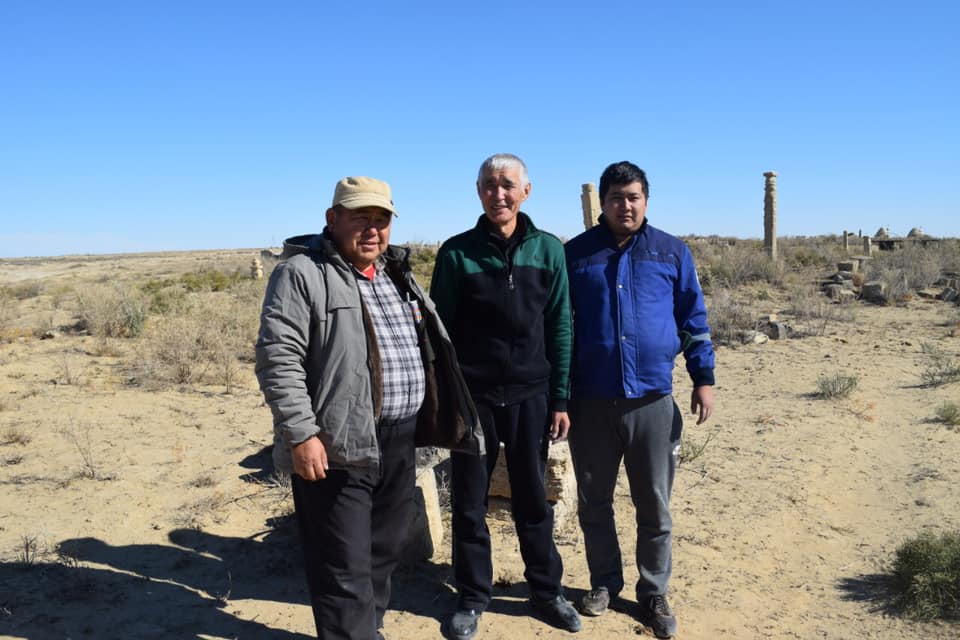
In early October, archaeologists of the Saraishyq Museum-Reserve A. Turaruly, A. Zhumabayev, M. Kasenov, N.Zheksenbayev conducted exploration at the site of Ushkan in order to study the medieval caravan routes between Saraishyq and Urgenish.
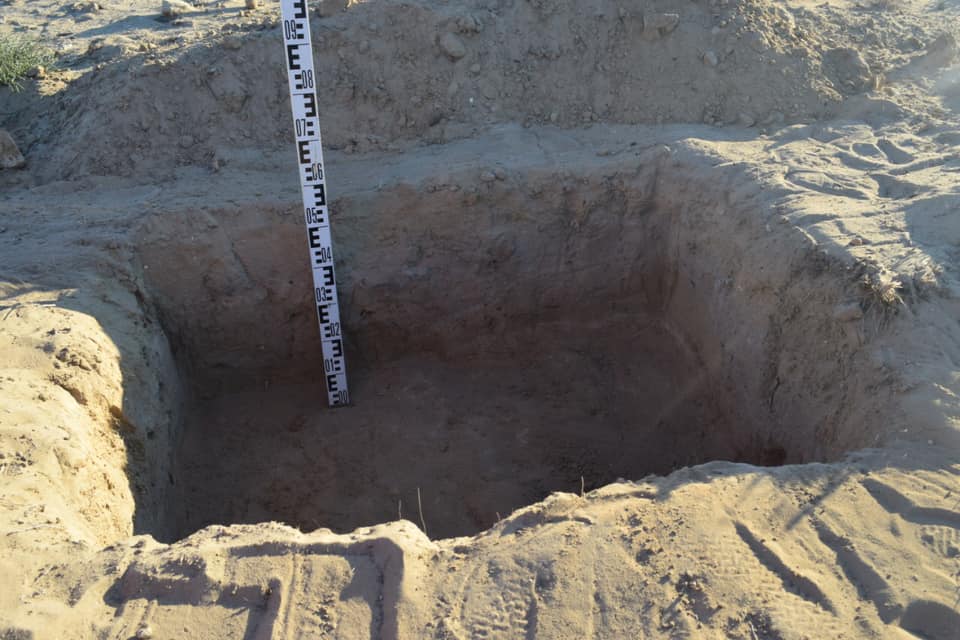
The medieval town of Ushkan is located 55 km southeast of the modern city of Kulsary. There is now a large necropolis here. Earlier, archaeologists claimed that to the northeast of the necropolis is the site of a medieval settlement. It suggests the presence of graves built mainly of medieval ceramic bricks in the area. Archaeologist L. L. Galkin considers the city of Trestago and this city of Ushkan to be the same city, marked on the map of the medieval Pizgani brothers. However, special excavations and archaeological studies of the monument have not yet been carried out. Not a single museum exhibit contains artifacts of the medieval city.Archaeologists of the museum-reserve carefully examined the surroundings of the burial ground and built observation pits in several places. As a result, it was decided that the cultural layer of the city has a thickness of 1-0. 5 m.Ceramic samples collected from the surface of the monument showed that it was made of red, gray clay and Kashin ceramics, fragments of Chinese celadon were found among the fragments of multicolored crimson dishes. This indicates that the city was a major trading point along the transcontinental caravan route.Among the coins found above twenty, there are silver dirhams. Numismatist P. Petrov stated that the analogue of the silver dirhem has not yet been met, and even more interesting. Uzbek Khan’s tenge minted in Khorezm and Zhanibek Khan’s tenge minted in Sarai-al-Jadida were found among the copper Bulls.Judging by these materials, it can be assumed that the time of the city’s existence is the gold-bearing period.The fact that the territory of the city extends up to 300 m to the east of the necropolis is evidenced by buildings made of ceramic bricks. The total area of the city was 300×500 m . the citadel was located in the north-west of the city, measuring 150×150 m.